Showing posts with label jewish holiday. Show all posts

4.30.2012

Omer Counting

Well, Pesach is over and the next big holiday coming up is Shavuot. More celebrations, more fun. But, what do you do until Shavuot? you might ask. I’ll tell you… We count. Yes, that’s right, we count the days from Passover to Shavuot. It’s called Counting the Omer. Every night we count and say a blessing. There’s a few other restrictions, too, no weddings, no listening to instrumental music, and no shaving or haircuts, at least, not until Lag B’Omer (the 33rd day of the count). As you probably guessed, Lag B’Omer is a big celebration day in a lot of communities and in Israel.

Happy Counting!


Post by Miss Eileen aka GoofingOff

9.03.2011

The New Year is Coming: A Tashlich Tutorial


Tashlich (tahsh-leek) comes from a root word which means "to cast away". It is the custom when Jews walk to a moving body of water on the first afternoon of Rosh Hashana (or the second day if the first happens to be Shabbat) and "throw away" their sins by tossing bread or cracker crumbs into the water. The concept is taken from a verse in the book of the Prophet Michah where it says,
"And Thou wilt cast ("ve-tashlich") all their sins into the depths of the sea" (Michah, 7:19)
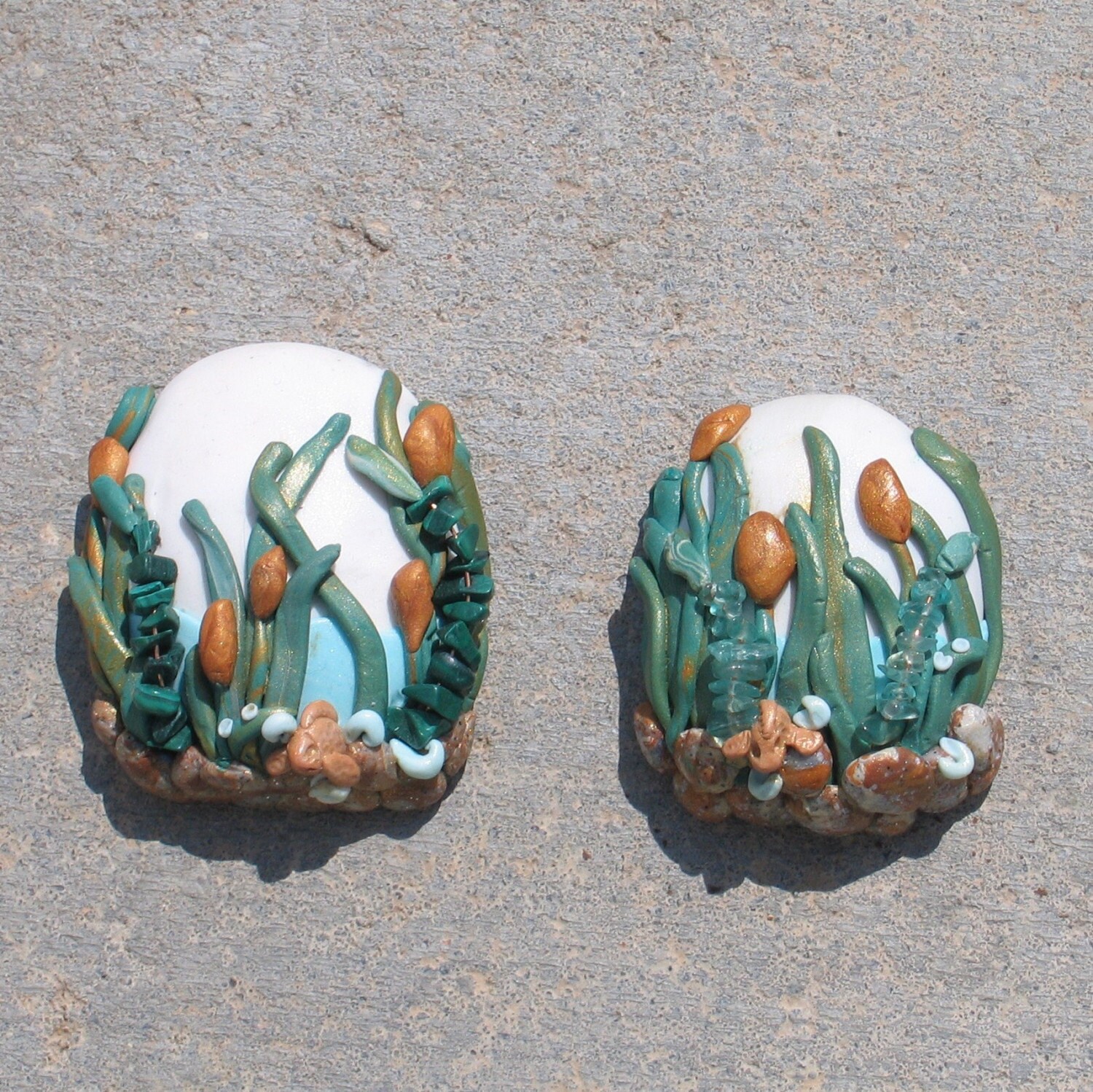
A River Runs Through It Beads by Tracey Lipman

The preferred body of water is one where there are fish. Fish never close their eyes, a reminder of the ever-watchful eyes of G-d, who records and remembers everything and constantly watches us with mercy.
Additionally, Jewish mystical tradition teaches that fish are immune from the Evil Eye. By casting our sins away where there are fish, we are also asking for protection from the evils of the world. 
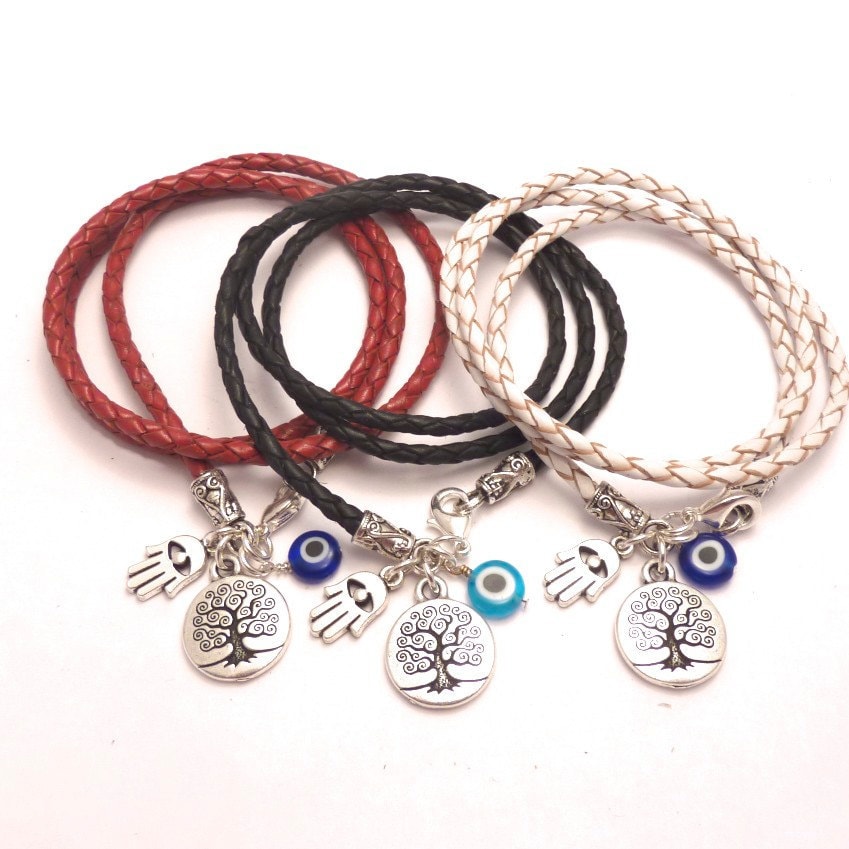
White Braided Leather Wrap Bracelet by charmeddesign1012

 During Tashlich, you walk to a nearby body of water. A river, sea, or lake are the best choices although, in their absence, a well or reservoir is acceptable. There is no special prayer for Tashlich. However, there are several Scriptural chapters relating to the idea of penitence and Divine forgiveness which are recited.
The water has SYMBOLICALLY carried away misdeeds and you are free to start over. This action gives one a new starting point for the New Year.

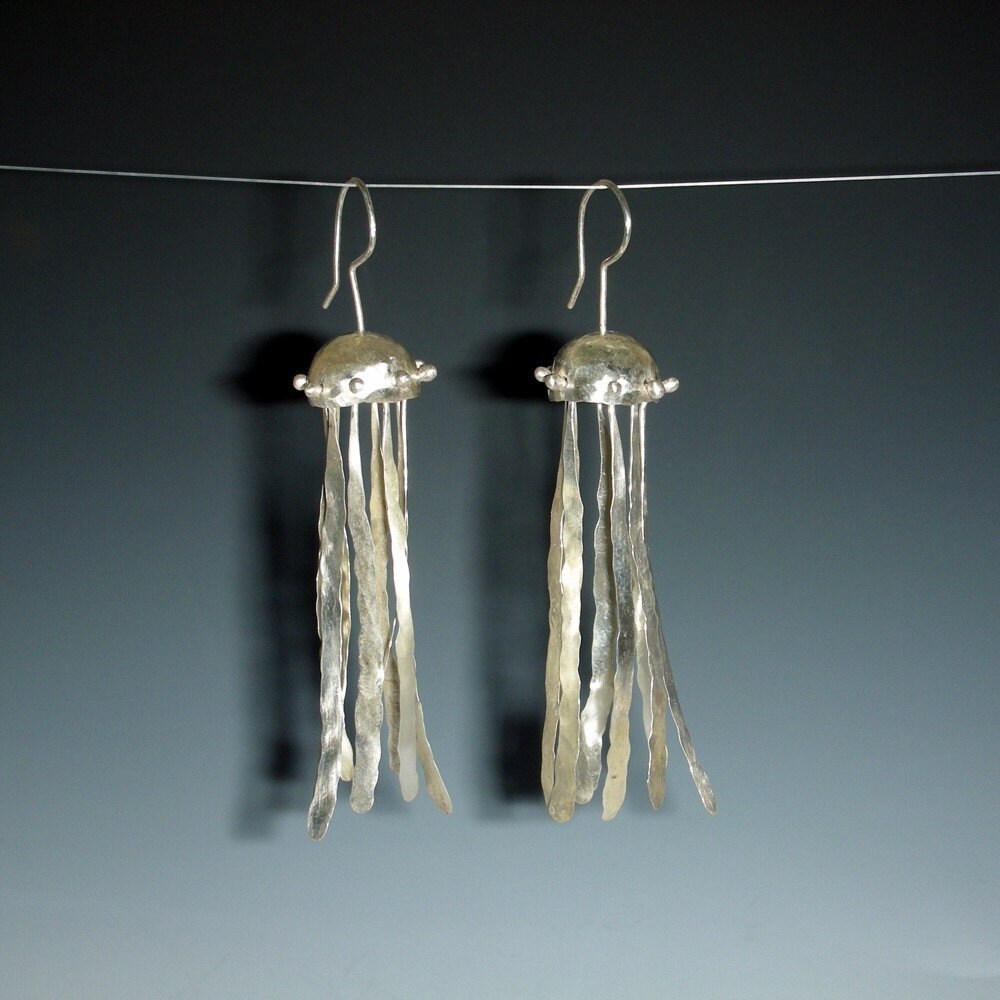
Jellyfish Earrings by markaplan


 Next: Traditional Greetings for the New Year
Post by April Grunspan 


6.05.2011

Shavuot - The Festival of Weeks - eve of June 7

This year Shavuot, or the Festival of Weeks, falls from the evening of June 7 through nightfall on June 9 (except in Israel, where it is only celebrated for one day). During this holiday we celebrate the day G-d gave the Torah to the Israelites assembled at Mount Sinai 40 days after the Exodus from Egypt.


It is noteworthy that the holiday is called the time of the giving of the Torah, rather than the time of the receiving of the Torah. The sages point out that we are constantly in the process of receiving the Torah, that we receive it every day, but it was first given at this time. Thus it is the giving, not the receiving, that makes this holiday significant.

But it's a holiday that is also connected to the season of the harvesting of grain. In the days of the Temple in Jerusalem, two loaves of bread from the wheat harvest were given as an offering on Shavuot.


Continuing with the harvest theme, Shavuot was also the first day which people could bring the first fruits of the Israeli growing season (Bikkurim): wheat, barley, grapes, figs, pomegranates, olives, and dates.

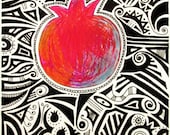
Pomegranate wall hanging


Although Shavuot has no defined commandments (mitzvot) other than refraining from work, a special service in temple, and holiday meals, it does have many customs, which can be remembered by the anagram acharit (“last” in Hebrew):

Akdamut: the reading of a special poem during morning services on Shavuot. This is traditionally read just before that day's Torah reading.

Chalav: “Dairy”, eating dairy meals during the holiday. Popular choices include cheesecake, cheese blintzes, cheese kreplach, and, my daughter's favorite, cheese burekas.

Cheese Plate


Ruth: The reading from the Book of Ruth at morning services.

Yerek: The use of greenery to decorate synagogues and homes during the holiday.

Torah: All night Torah study. On the holiday of Shavuot, the entire Jewish nation heard from G‑d the Ten Commandments. The next day Moses went up to Mount Sinai, where he was taught by G‑d the rest of the Torah—both the Written and Oral Laws—which he then transmitted to the entire nation.

Sterling Torah Pendant

3.14.2011

Don't Passover Etsy Chai

Don't Passover EtsyChai!

In the Purim post, Susan said "The short history of every Jewish holiday is, “They tried to kill us, we won, let’s eat!” For most of my youth, Passover was just that, my everyday eats made with matzoh instead of bread. I learned to make matzoh balls, matzoh brie, and matzoh farfel. I gave up chocolate doughnuts to eat chocolate macaroons and chocolate covered Joyva Jels (my absolute all-time favorite, let that be the last thing that I get to eat and I will die with a smile on my face).

When I moved away from the large Jewish communities finding food for Passover became a challenge. My favorite butcher was 1200 miles away and, if I was lucky, the supermarket might have a 1/4 aisle dedicated to kosher food. As food for Pesach became less traditional (a lot more fish, a bit of vegetables, and thank God for Hebrew National) the importance of Seder customs grew. The objects on my Seder plate are traditional and the plate has to be sensational. The Cup of Elijah is a vintage cobalt blue glass handed down through my family. My dishes are my great-grandmother's, the one who knew I would like to bake when I was three (didn't matter if I could reach the stove, she knew).

In my home the Seder is no longer a family event but a celebration of freedom and faith. The celebrants come from different backgrounds and their knowledge of Judaism varies. That's OK. I get to share my knowledge and my celebration. A common question though, is "What should I bring?" Food's out, I got that covered. Hostess gifts are in order and Etsy Chai is the place to find the most original, artistic gifts anywhere.

From beautiful art for the wall,


Peace, A Hand Signed Print by Another Creation


cards to express your sentiment,

Judaic Star of David Gift Tag by BBDesigns


to gorgeous Seder plates


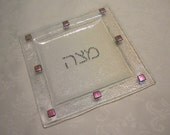
Mosaic glass fused Seder plate by Yafit Glass

(I collect these, hint, hint), the shopping list is covered no matter what what type of budget a person is on.


There is even fabric for the do-it-yourselfer in my shop (I had to blow my own horn) and illusion knitting patterns (unbelievable, you just got to see them) in A Cache of Jewels shop.

Judaic Fabric Alef Bet on White background Fat Quarters by GoofingOff (that's me)


Setter Illusion Knitting Pattern by A Cache of Jewels

That's a Jewish Setter (I have Jewish poodles).


Here's a few more ideas:


Hebrew Scrabble game board notepad by Poemweave


Burning Bush-Print Reproduction by LBolter


PASSOVER Seder Plate Earrings with Sparkling Blue Czech Crystals by Down to Earth Creations


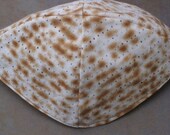
Our Team's Passover Promotion starts this week. Get started shopping while the wonderful things are still there. The matzoh kippa from MaybeSews is already sold (maybe she'll make another one).
Enjoy!
Post by Eileen Patterson of GoofingOff

2.17.2011

Purim Katan - Little Purim - Jewish Holiday starts Feb 17 at sundown

When is Purim Katan? Purim Katan, in 2011, begins at sundown, in the diaspora, on:
Erev Shabbat (Thursday evening), February 17 until Friday evening, February 18, 2011 - I Adar 14, 5771.
Shushan Purim, therefore, falls on Shabbat.
In a leap year when, according to the Jewish calendar, there are two months of Adar, Adar Rishon (I Adar) and one in Adar Sheini (II Adar); we celebrate Purim Katan in the first Adar, Adar Rishon. The fact that Purim Katan is in Adar Rishon indicates that this year is a leap year, the idea of which is to reconcile the difference between the solar and lunar years.

Purim Yellow Jasper Grager Earrings

“Purim Katan” is also called the “fourteenth of the first Adar” in the Gemara. Therefore, when we choose to use the term “Purim Katan”, we are emphasizing that it has an aspect in which it is smaller than Purim, yet it comes first.

In the case of Purim the following day is Shushan Purim, and in the case of Purim Katan it is Shushan Purim Katan.
Purim Kattan is a microcosm of the larger Purim. It comes exactly thirty days before the "big" Purim and serves as an official reminder that it is time to begin preparing ourselves for the upcoming holy day. In essence, we have thirty extra days to put ourselves in the festival spirit.

Purim Hamantaschen Earrings

There is a significant connection between Purim and Purim Katan. As the Mishna teaches:
Megillah 6b ‘There is no difference between the fourteenth of the first Adar and the fourteenth of the second Adar save in the matter of reading the Megillah[3] and gifts to the poor’.
Jewish Holiday Gift Bag

Rabbi Eli Mansour teaches us about the effects of Purim Katan on our prrayers:


On these days we omit the Tahanunim[7] section of the prayer service, including the Viduyim.[8] We also omit the paragraph of “La’menase’ah” and “Tefila Le’David” which are incongruous with the festive nature of these days. Tahanunim is likewise omitted from Minha on the afternoon of the thirteenth of Adar Rishon. When the fifteenth of Adar Rishon falls on Shabbat, we do not recite “Sidkatecha” during Minha. (The fourteenth of Adar never falls on Shabbat, but the fifteenth can occur on Shabbat.)
The Code of Jewish Law cites an opinion that one should increase in festivity and joy, but rules that there is no obligation to do so; “Nevertheless, a person should increase somewhat in festivity... for ‘One who is of good heart is festive always’."

On Purim Katan there are no mitzvot performed. One can therefore feast, drink, and rejoice on every free moment of the day. Thus the idea of “He who is of a good heart rejoices continually” is seen most openly on Purim Katan.


Because Purim Katan falls on erev Shabbat when we are already beginning to expience the joy of Shabbat, suggests that 5771 is an especially auspicious time to maximize our joy by combining erev Shabbat with Purim Katan.

Source: http://www.betemunah.org/katan.html

 
We're getting ready for Purim and Passover. How about you? What are you doing?